

The 50-plus consumer has become the backbone of the cognitive supplement category, and phosphatidylserine is one of the few ingredients in that basket with decades of clinical study behind it. Yet most sourcing playbooks in the industry are written for sports nutrition or nootropic skus aimed at younger buyers, and the assumptions they encode — dose formats, allergen positioning, packaging, claims register — do not transfer cleanly to an older audience. Sourcing phosphatidylserine for a healthy-aging line means re-deriving the specification from the segment's own physiology, purchase drivers and regulatory environment: which grade and concentration make sense, what daily dose the evidence supports, which delivery formats older consumers can actually use, and what documentation a US or EU programme needs before launch. This article walks through those decisions in the order a product development team meets them. If your positioning leans toward the soy-free wellness buyer common in this demographic, review the sunflower-derived phosphatidylserine grades alongside the options below.
Why the 50+ Segment Changes the Sourcing Brief
Healthy-aging buyers are not simply older nootropic customers. The purchase is often researched over weeks, sometimes initiated by an adult child or recommended by a pharmacist, and the buyer reads labels with more scepticism than any other consumer group in the category. Three consequences follow for the ingredient programme. First, tolerability and allergen transparency weigh heavier: soy-derived materials need unambiguous allergen statements, and many brands in this segment default to soy-free sourcing to remove the question entirely. Second, the expected usage cycle is long — measured in months of daily consumption rather than a 30-day experiment — so oxidative stability and shelf life carry commercial weight they lack in faster-turning lines. Third, dose transparency is a trust proxy: this consumer checks milligrams per serving against what they read online, which pushes brands toward evidence-aligned doses rather than fairy dust. Each of these consequences lands on the raw material specification, not just the marketing brief, which is why the sourcing conversation should start with the segment instead of the price list.
Grade, Source and Concentration Decisions for Age-Focused Formulas
Phosphatidylserine is offered in powder grades typically concentrated at 20, 50 and 70 percent, from soy or sunflower lecithin feedstock. For a 50+ programme the choice is driven by the dose target and the delivery format together. A 50 percent powder is the workhorse for capsule lines at 100–300 mg phosphatidylserine per serving: enough concentration to keep capsule counts reasonable for users who dislike swallowing several large capsules, without the cost of the 70 percent grades that mainly earn their premium in dose-dense formats such as stick packs or single-serve liquid shots. Sunflower-derived material suits the segment on two axes — it answers the soy-free preference directly and simplifies allergen labelling on both sides of the Atlantic. A daily-dose powder for older consumers, by contrast, may justify higher concentration to keep serving sizes small. Because these trade-offs interact with assay method and inclusion level, our comparison of phosphatidylserine concentration grades gives the cost and formulation math for each grade before you fix the specification.
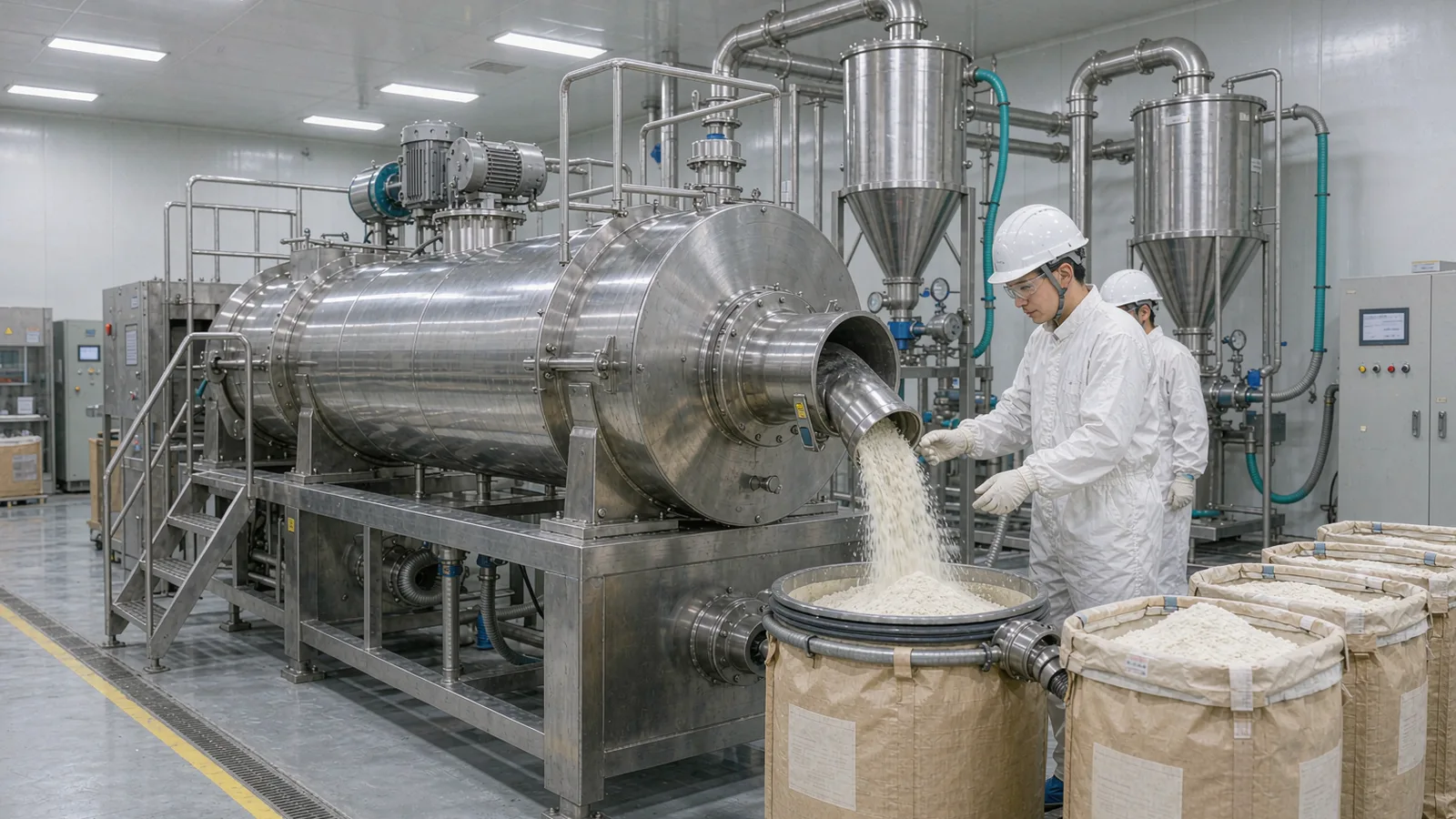
Evidence-Aligned Dosing and Raw-Material Specifications
The clinical tradition behind phosphatidylserine rests on daily doses of 100 to 300 mg, taken consistently over weeks — a pattern that matches how the 50+ consumer already expects to use the product. Translating that into a raw-material specification is where sourcing teams earn their keep. The label claim must survive the assay variance of incoming batches, so a 300 mg-per-serving claim built on a 50 percent grade needs a specification window wide enough to hold the dose at the lower assay bound, and the blend uniformity validation must be run at the actual inclusion level, which is low. Oxidative-stability parameters deserve tighter limits than a sports-nutrition spec would set, because this material may sit in a pharmacy or a consumer's cupboard for a year of daily use; peroxide-value limits and nitrogen-flushed packaging both protect the claim that "consistent daily use" depends on. Write the specification around the consumer's usage pattern — dose, cycle length, storage reality — and the supplier conversation becomes a document review instead of a negotiation.
Delivery Formats for Older Consumers — and What They Demand from OEM
Format failures, not ingredient failures, are what get a healthy-aging line returned. Arthritic hands and age-related swallowing changes make large capsules a genuine barrier, so the format decision deserves as much sourcing attention as the grade. Two-piece capsules in smaller sizes or minis work when the concentration math permits; softgels suit users who prefer a smooth shell but impose excipient and stability questions; stir-into-water powders and stick packs sidestep swallowing entirely and pair naturally with a morning-routine habit, though they demand dispersibility and taste management at the blending stage. Gummies, popular elsewhere in the category, are the weakest fit here because sugar and texture objections run high among this audience. Each format pushes different requirements back into the ingredient specification — flow properties for capsule dosing, particle size and dispersibility for powders, oxidative headroom for anything in a bottle opened daily for months. The OEM implications of each option, from blend uniformity runs to capsule-count planning, are mapped in our guide to phosphatidylserine dosage-form OEM selection.

The Claims Register for Age-Focused Positioning in the US and EU
Positioning that speaks to aging memory works within different regulatory frames in the two launch markets. In the US, phosphatidylserine supports conventional structure/function language about memory and cognition, with the standard FDA disclaimer, and a century of NDI history for the ingredient keeps the path conventional — but age-disease phrasing that implies prevention or treatment of cognitive decline stays off the label. In the EU, no authorised health claim currently connects phosphatidylserine to memory or cognitive function, so labels rely on careful presentation: nutrient-content statements, brand storytelling outside regulated claim territory, and attention to how member-state authorities read implied claims. The practical sourcing consequence is identical in both markets: keep every dossier, trial reference and marketing assertion in a claims file that the ingredient documentation can support, and choose a supplier whose regulatory desk has seen 50+ positioning before. Brands that build the claims file around the ingredient's real documentation move through retailer review faster than brands that write copy first and hunt for evidence afterward.
Supplier Documentation Before You Commit to the Segment
The 50+ buyer's scepticism surfaces in retailer and distributor onboarding, so the ingredient file should be assembled for that scrutiny from day one. Before committing volume, collect: a lot-specific certificate of analysis with the assay method named; the allergen statement, and where sunflower sourcing is part of the positioning, GMO and soy-free declarations that will survive a retailer's own audit; oxidative-stability and shelf-life data that support a 24–36 month best-before window under real distribution conditions; change-control terms that notify you if the lecithin source or concentration standard changes; and an audit invitation to the production site, because the "healthy aging" consumer's trust ultimately flows from yours. A supplier who produces this pack without prompting is telling you how the rest of the relationship will run — and how your retail onboarding will go.
SSS
Q: What phosphatidylserine dose does the clinical evidence support for a 50+ product?
A: The long-standing studies in older adults with age-related memory complaints used 100–300 mg per day, taken consistently over several weeks. Most commercial programmes in this segment target the middle of that range, which is why the 50 percent powder grades are the volume workhorses for capsule formats.
Q: Is sunflower-derived phosphatidylserine better suited to a healthy-aging line than soy?
A: Functionally the two perform similarly, but the soy-free positioning removes an allergen question this demographic asks frequently, simplifies EU and US allergen labelling, and supports the clean-label preference common among older wellness buyers. Soy-derived material remains fully viable where cost takes priority over positioning.
Q: Which format works best for older consumers?
A: Smaller two-piece capsules or easy-swallow minis suit users comfortable with pills; stir-into-water powders and stick packs remove the swallowing barrier entirely and anchor a daily routine. Gummies are a weak fit for this segment because sugar content and texture draw objections.
Q: What documentation should I request before launching a 50+ phosphatidylserine sku?
A: Lot-specific COAs with named assay methods, allergen and GMO/soy-free declarations, oxidative-stability and shelf-life data supporting your best-before window, source change-notification terms, and audit access to the production site. This pack feeds both your own qualification file and downstream retailer onboarding.
Sonuç
Sourcing phosphatidylserine for the healthy-aging segment is a specification exercise before it is a marketing exercise: fix the evidence-aligned dose, let it drive the grade and format, tighten the stability limits for a year-long daily-use product, and assemble the documentation that this demographic's retail gatekeepers will ask for. Brands that reverse the order — copy first, ingredient later — pay for it in reformulation, retailer pushback and slow launches. The ingredient decisions above all route through one document set, and a supplier who can stand behind every line of it makes the segment easier to enter. To see how that documentation is built and controlled, review Nutranexa's quality and R&D programme and request the full pack for the grade your first 50+ programme will use.
Kaynaklar
- FDA — Dietary Supplements (structure/function claims and labeling framework)
- European Commission — Nutrition and Health Claims Register
- EFSA — NDA Panel (dietetic products, nutrition and allergies, health claim assessments)
- PubMed — search: phosphatidylserine cognition older adults
Uygun alıcı profili
Bu kılavuz kimler için
Bu kılavuz aşağıdaki alıcı profilleri için hazırlanmıştır. Uygun sınıflar, belgeler ve sonraki adımlar için profilinizi açın veya gereksinimlerinizi doğrudan bize iletin.
Önerilen sonraki adımlar
- Gözden geçirin Fosfatidilserin ürün sayfası.
- Karşılaştır Soy PS ve Ayçiçeği PS.
- Kontrol Üretim kanıtı ve Kalite ve Ar-Ge.
Ürün belgeleri için satış görüşüne ulaşın
Kaynak tercihini, başvurunu, ülkeyi ve yıllık miktarı paylaşın.
İletişim Satışları