

Phosphatidylserine stays in sports nutrition briefs because it sits credibly in recovery, focus, or stress-management positioning while remaining a familiar phospholipid input.
Most buyer frustration is not about whether the ingredient works. It is about friction discovered late: assay never converted into real input weight, powder that will not flow on a high-speed filler, or claims written before checking the target market. This review covers input selection, dosage form, dose arithmetic, stability, and claim review from the buyer's side. Confirm batch-specific values against current lot files.
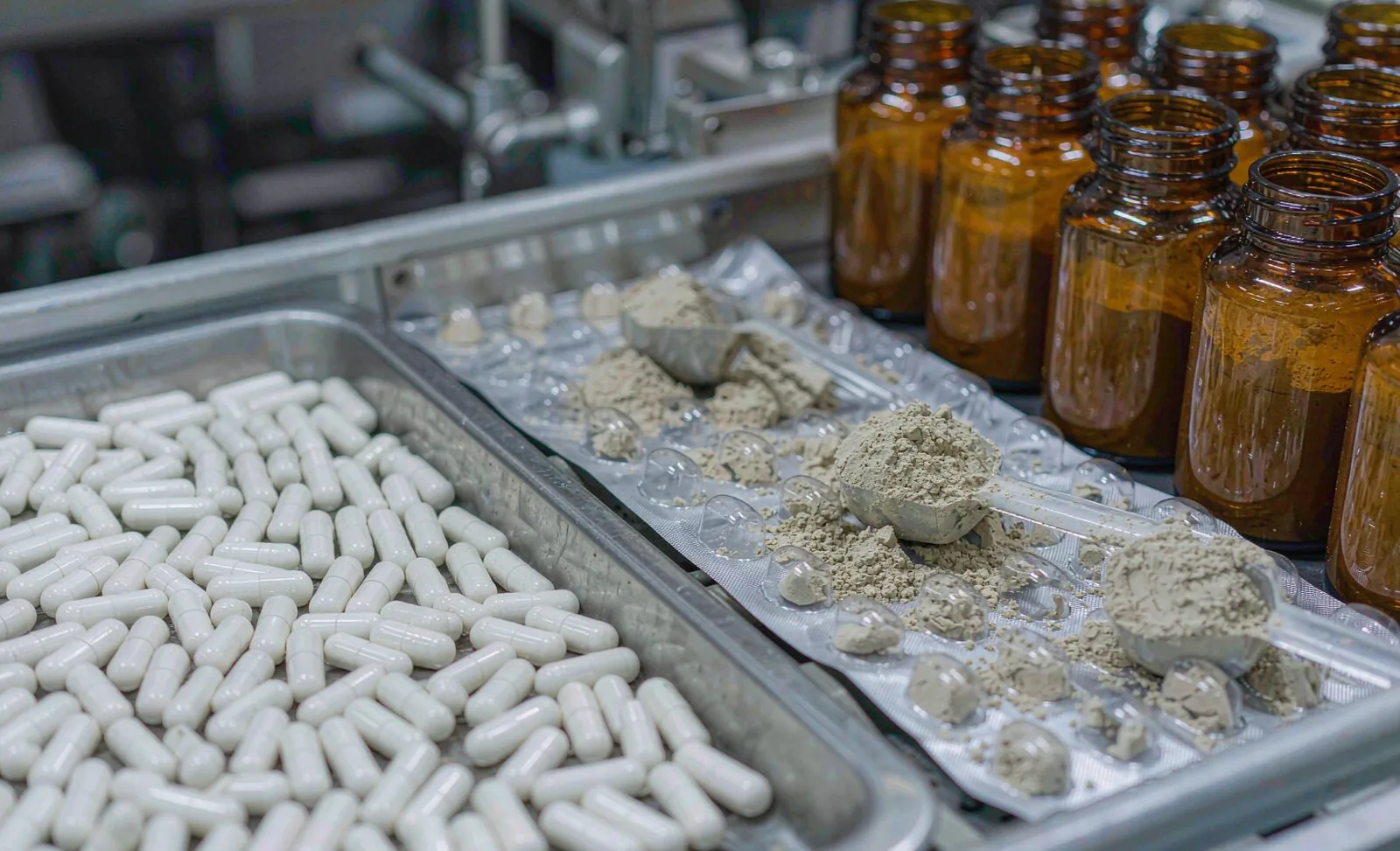
Why Sports Nutrition Buyers Look Closely at Phosphatidylserine Inputs
Sports nutrition tolerates formulation failure poorly: launches cluster around seasons and retailer resets, so a two-month delay often costs more than a small input premium.
Three factors make specification consequential: dose honesty, since errors found at finished-product testing are expensive; channel scrutiny, where tested-athlete positioning adds documentation expectations; and matrix complexity, because adding a hygroscopic phospholipid changes how the blend handles.
Choosing the Input: Grade, Assay, Source, and Physical Behaviour
Assay percentage and label arithmetic
An assay — commonly 20%, 50%, or higher — expresses PS content relative to material as supplied; the balance is largely other phospholipids and carrier.
The arithmetic is direct: divide target by assay. A 100 mg phosphatidylserine target needs roughly 500 mg input at 20% assay and 200 mg at 50%. Higher assay reduces input weight and helps when capsule fill volume is tight, but costs more per kilogram. Choose against your actual binding constraint.
Sunflower versus soy in sports positioning
Source choice is usually label-driven. Sunflower-derived phosphatidylserine suits brands avoiding soy-derived wording; soy-derived material remains the established volume option.
The decision affects lead time, source and allergen documents, and EU labelling where soy-derived declaration applies. Qualify both routes if you can.
Particle size, flow, and bulk density
Request bulk density, tapped density, and particle size distribution, then check them against your equipment tolerances. Low bulk density limits capsule fill weight, leaving three options: higher assay, granulation, or a two-capsule serving. Poor flow shows up as weight variation, so request enough sample for a real trial.
Dosage Forms: How Phosphatidylserine Behaves in Production
Capsules and tablets
Capsules are the most forgiving format: the material is protected until consumption and fill weight can be adjusted by changing assay grade. The real risks are flow-driven weight variation and long-term shell compatibility, so ask your OEM for accelerated stability data.
Tablets add compression questions and often need binder or flow aid changes, which alter the excipient panel and therefore the label.
Ready-to-mix powders and sticks
Once blended and packed into a tub or stick, moisture management sets shelf life. Specify low initial moisture and peroxide limits, use barrier film, include desiccant in tubs where practical, and limit headspace during filling.
Taste is the second issue. Phospholipid powder carries characteristic notes that interact differently with cocoa, vanilla, citrus, and berry systems, so run sensory panels at real inclusion levels.
Gummies, bars, and ready-to-drink beverages
These formats raise the bar. Gummies add heat and water activity challenges, bars reduce flexibility, and beverages add dispersion and emulsion questions needing extra support. State your roadmap at inquiry stage, because the grade suited to a capsule may not suit an emulsion.
Dose Levels and Label Arithmetic
Working per-serving ranges
Commercially available sports products typically position phosphatidylserine in the low hundreds of milligrams per serving, though levels vary by format and market.
Treat published ranges as context. Fix your serving structure first, then let regulatory and formulation teams set the target against format, substantiation, and market rules.
Converting target phosphatidylserine to input weight
Use input = target phosphatidylserine ÷ assay and document it in the specification. Add overage only where internal policy and stability data justify it, and record why — undocumented overage is a recurring audit finding.
Confirm the panel declaration matches your method: whether you declare phosphatidylserine, phospholipid complex, or total input depends on your market's labelling rules.
Stacking with caffeine, creatine, and protein
Sports formulas combine phosphatidylserine with other actives. Check interaction effects on taste and flow rather than assuming additive behaviour, and re-run uniformity testing after matrix changes. Higher assay helps where powder load approaches the format limit — in a stick near maximum fill, that decides the grade.
Stability, Taste, and Analytical Control
Moisture and oxidation sensitivity
The phospholipid structure is sensitive to moisture uptake and oxidative change, both accelerated by heat, light, and oxygen. Specify numeric limits for moisture or loss on drying, peroxide value, and acid value, plus storage conditions and retest expectations.
Packaging and shelf-life design
Packaging should follow finished-product water activity, not marketing preference. Barrier film, desiccant type and quantity, pack size relative to consumption after opening, and closure integrity shape real shelf life. Run stability on the actual selling format — a capsule result says little about an open tub in a humid climate.
Release and stability test items
A practical panel covers identity, assay by appropriate chromatographic method, moisture or loss on drying, peroxide and acid value, heavy metals including lead, arsenic, cadmium and mercury, residual solvents where applicable, and microbiology.
Require batch-specific COA rather than sample COA, with method references stated.
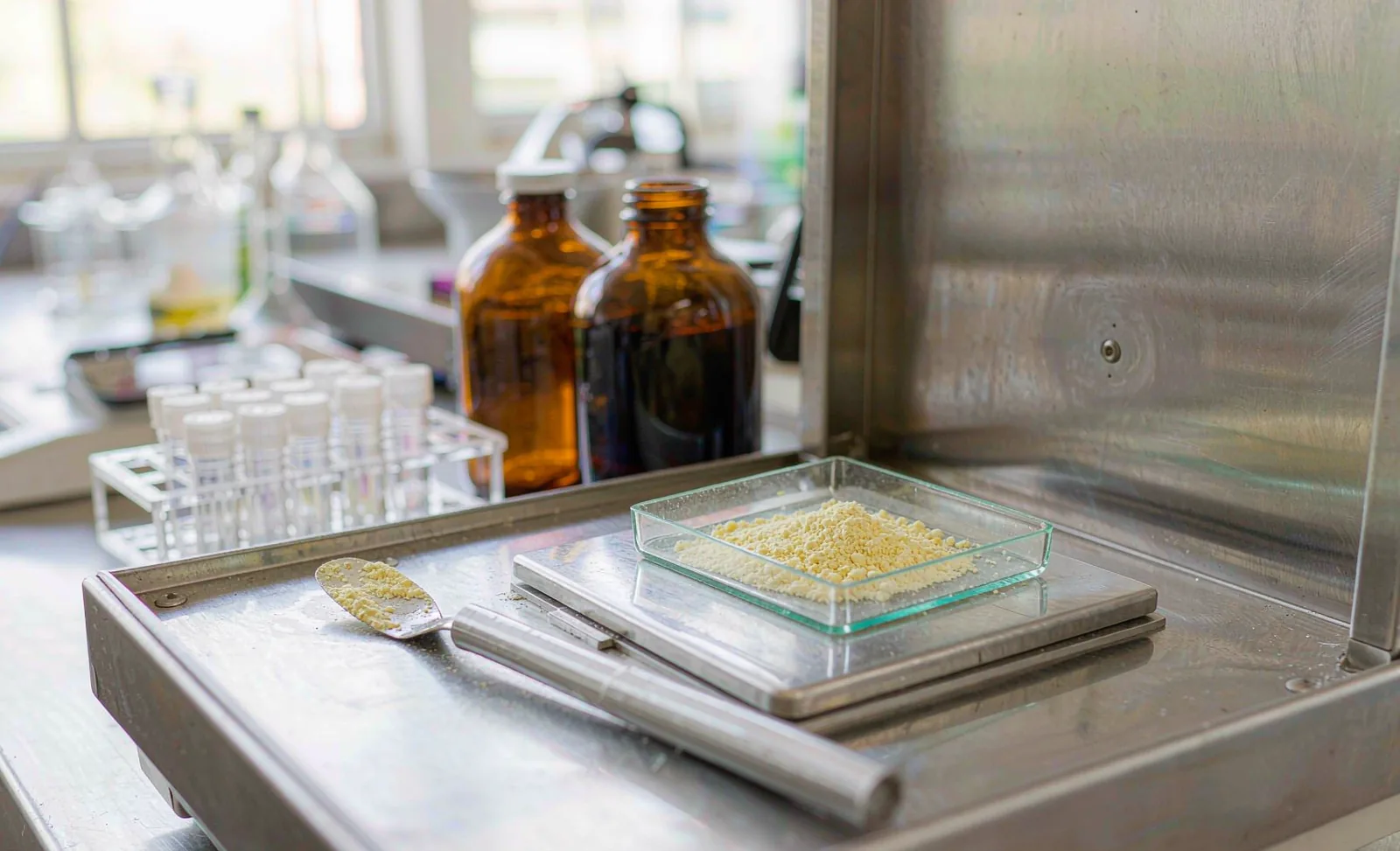
Claim and Compliance Review Before Launch
US structure/function claims and substantiation
In the United States, supplement claims sit under the framework administered by the Food and Drug Administration, with advertising substantiation oversight from the Federal Trade Commission. Structure/function claims generally require notification and a mandatory disclaimer when certain wording is used.
Your supplier does not determine permitted wording — your company substantiates and defends its own claims. Get composition and quality documents from the supplier, then route wording through your own legal review. Competitor labels are not approval.
EU health claims framework and the register check
In the European Union, nutrition and health claims are governed by Regulation (EC) No 1924/2006, with food supplements falling within Directive 2002/46/EC as implemented nationally. Health claims are permitted only where authorised and listed in the EU register maintained by the European Commission, with assessment by the European Food Safety Authority.
Phosphatidylserine-related cognition and stress-associated submissions have historically faced adverse or non-authorised outcomes. Search the register for your exact wording, record the date and result, and do not use unauthorised claims. Implementation differs by member state, so treat readiness as a per-country exercise.
Sports-channel due diligence and certification
If your product targets tested athletes or retailers selling into the tested channel, plan for third-party certification such as Informed Sport or NSF Certified for Sport. That requires lot-level traceability documentation and practical batch-specific testing, so raise it at RFQ stage.
A Specification Checklist for Sports Formulators
Before requesting bulk quotation, confirm these points:
- Target phosphatidylserine per serving and the assay that fits your fill limit
- Source preference, sunflower or soy, with the reason recorded
- Dosage form and inclusion constraint
- Numeric limits: assay, moisture, peroxide, metals, micro
- Density, flow, and particle size compatible with your equipment
- Claim wording and certification plan reviewed
Preguntas frecuentes
Which phosphatidylserine grade should sports nutrition buyers choose?
Choose against your binding constraint. Tight capsule fill volume favours higher assay; cost-driven lines may accept lower assay. Fix the delivered target first.
How do I convert a target phosphatidylserine level into input weight?
Divide the target by the assay as a decimal: 100 mg needs about 500 mg input at 20% assay and 200 mg at 50%. Document any overage and justify it from stability data.
Is phosphatidylserine stable enough for ready-to-mix powder?
Yes, if moisture control is designed deliberately — barrier film, desiccant where appropriate, low initial moisture limits, and realistic pack size. Confirm with stability testing on the real finished matrix.
Can I make cognitive or stress-related claims for phosphatidylserine?
Not automatically. In the US your company substantiates claims and handles notification requirements. In the EU health claims must be authorised and registered before use, and several phosphatidylserine submissions have not been authorised.
What sample quantity should I request for sports product development?
Ask for kilograms rather than grams, so you can run your real process at real speed and observe flow, fill uniformity, taste, and early stability together.
Conclusión
Phosphatidylserine can strengthen a sports nutrition portfolio, but failures here are usually mundane: dose calculated against the wrong assay, powder that will not flow at production speed, film that admits moisture, or claim language written before the register check.
Working through input selection, dosage form behaviour, dose arithmetic, stability control, and claim review in that order turns these into routine buyer checks. Doing it before requesting bulk quotation also gets better answers, because a specific brief attracts a specific response.
Fuentes
- U.S. Food and Drug Administration (FDA) — Dietary Supplements: https://www.fda.gov/food/dietary-supplements
- Federal Trade Commission (FTC) — Advertising and Marketing: https://www.ftc.gov/
- European Food Safety Authority (EFSA) — Applications and Assessments: https://www.efsa.europa.eu/
- European Commission — Nutrition and Health Claims: https://commission.europa.eu/
- International Organization for Standardization (ISO): https://www.iso.org/
Próximos pasos recomendados
- Revisa el Phosphatidylserine página del producto.
- Comparar Soy PS y Sunflower PS.
- Verificar prueba de fabricación y Calidad e I+D.
Comuníquese con ventas para obtener documentos de productos
Comparta preferencia de fuente, aplicación, país y cantidad anual.
Contactar con Ventas