
Phosphatidylserine rarely fails buyers at the quality stage anymore — specifications are mature and documentation practices are well established. Where PS projects stall is time. A launch date built on an optimistic lead-time assumption collides with raw-material production queues, third-party testing, and freight windows, and suddenly the marketing calendar is driving the quality decisions it should never drive. Lead-time and capacity planning for PS is not exotic: it is the disciplined application of a timeline you can actually observe, with buffers sized to the risks you can name. This guide walks through the stages, the drivers, and the planning mechanics that keep PS supply ahead of production schedules.
The PS Lead-Time Timeline, Stage by Stage
A bulk PS order passes through roughly six stages, each with its own clock. The ranges below are typical industry planning figures — always confirm the current numbers with your supplier in writing at quotation stage.
Stage 1 — Order confirmation and input reservation (days to 2 weeks). The supplier confirms the specification, allocates or reserves raw lecithin inputs, and schedules the batch. For make-to-order grades or unusual specifications, this stage stretches as input materials are procured.
Stage 2 — Production and concentration (typically 2–6 weeks). PS is produced by enzymatic conversion of phospholipid concentrate, followed by purification and drying. Batch scheduling dominates this stage: a supplier with a full reactor calendar adds weeks that never appear in a price list.
Stage 3 — Quality control and release (1–3 weeks). In-house testing covers assay, impurity profile, and microbiology. Many buyers also require third-party or pre-shipment testing on top of the CoA, which adds its own cycle.
Stage 4 — Documentation and export preparation (days to 2 weeks). Certificates of origin, health certificates, and shipping documents are assembled; competent-authority endorsements where required have their own queues.
Stage 5 — Transit (3–6 weeks ocean freight from Asia to US or EU ports; days by air). Ocean transit variability — port congestion, schedule reliability, customs examination — is the stage buyers control least.
Stage 6 — Receiving and incoming release (days to 2 weeks). Your own incoming inspection, sampling, and quarantine release before the material is available to production.
Run the stages end to end and a realistic planning figure for a new order of standard-grade powder PS is roughly 2–3 months ocean, less by air at a meaningful cost premium. First orders run longer than repeat orders: supplier onboarding, sample approval, and spec negotiation sit in front of the production clock.
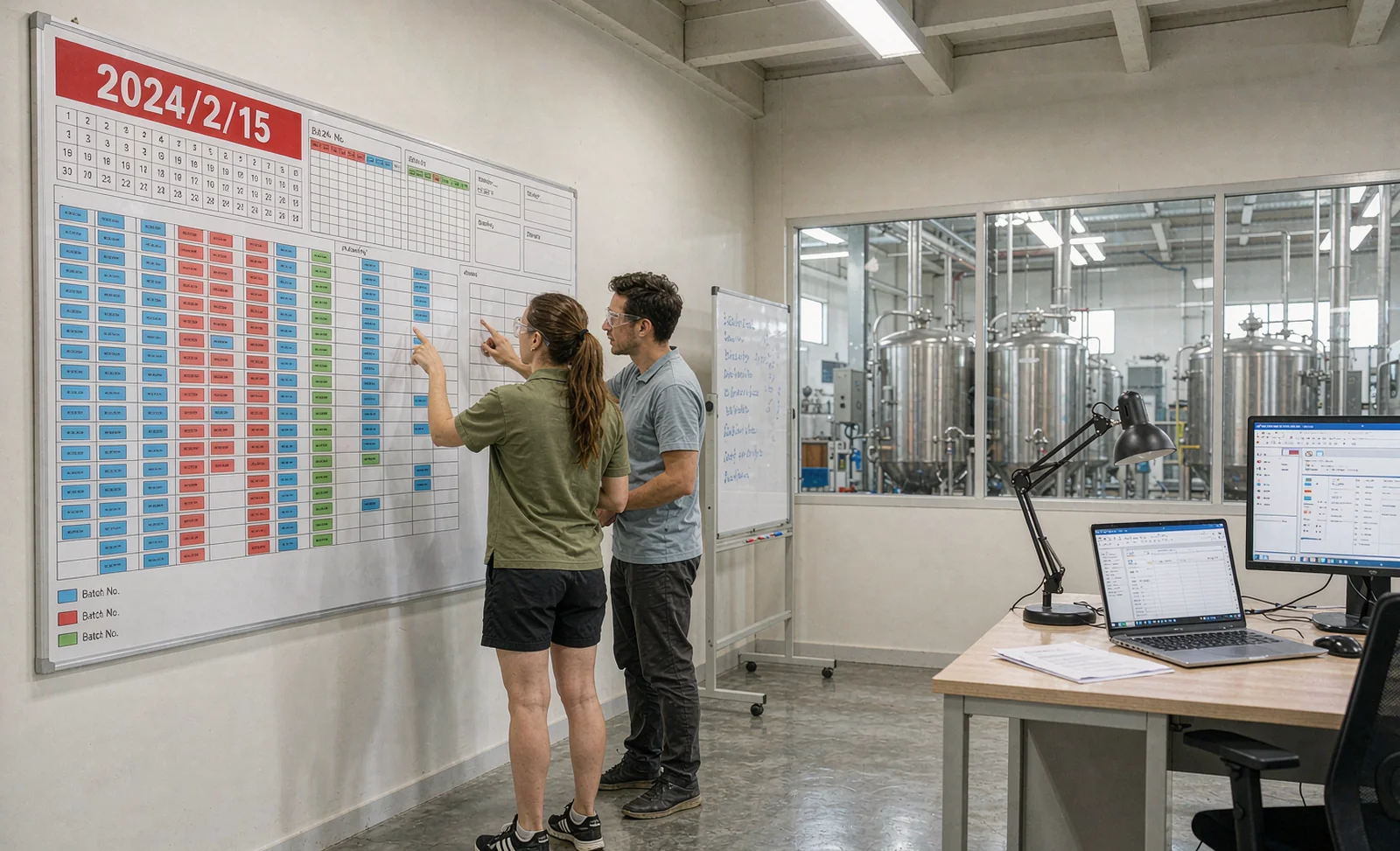
What Drives Capacity in the PS Supply Chain
Four factors determine how much PS a supply chain can move and when:
Reactor and downstream capacity. Enzymatic conversion and concentration are capital-intensive steps concentrated in a limited number of facilities. Global PS capacity is real but not elastic on demand — new lines take quarters to commission, not weeks.
Input availability. PS starts from phospholipid concentrates, historically soy lecithin and increasingly sunflower lecithin for allergen-sensitive markets. Lecithin supply follows agricultural cycles; source-crop disruption propagates into PS availability with a lag.
Seasonality of demand. Cognitive-health product launches cluster around Q4 retail seasonality and New Year formulation cycles, which compresses supplier calendars in the quarters before. Buyers ordering for a Q4 launch are competing with everyone else doing the same.
Quality release throughput. Testing and release are frequently the hidden bottleneck, because they run at laboratory speed, not production speed. A supplier whose reactors are free but whose QC queue is deep behaves like a slow supplier.
Planning Mechanics: Forecasts, Safety Stock, and Order Cadence
Three planning tools do most of the work:
Rolling forecast with commitment tiers. Share a 12-month rolling forecast with your supplier, distinguishing firm orders from projections. Suppliers allocate capacity against committed volume; a forecast marked as advisory produces advisory service. Aligning the forecast refresh with your own S&OP cycle keeps it honest.
Safety stock sized to named risks. Rather than a universal "X weeks of cover" rule, size the buffer against the specific failure modes: transit variability for long ocean lanes, release-cycle variability for new specifications, and demand variance for new products. As a planning convention, many ingredient buyers carry cover in the range of 8–16 weeks for ocean-sourced materials, then trim as the supply relationship matures and variance data accumulates.
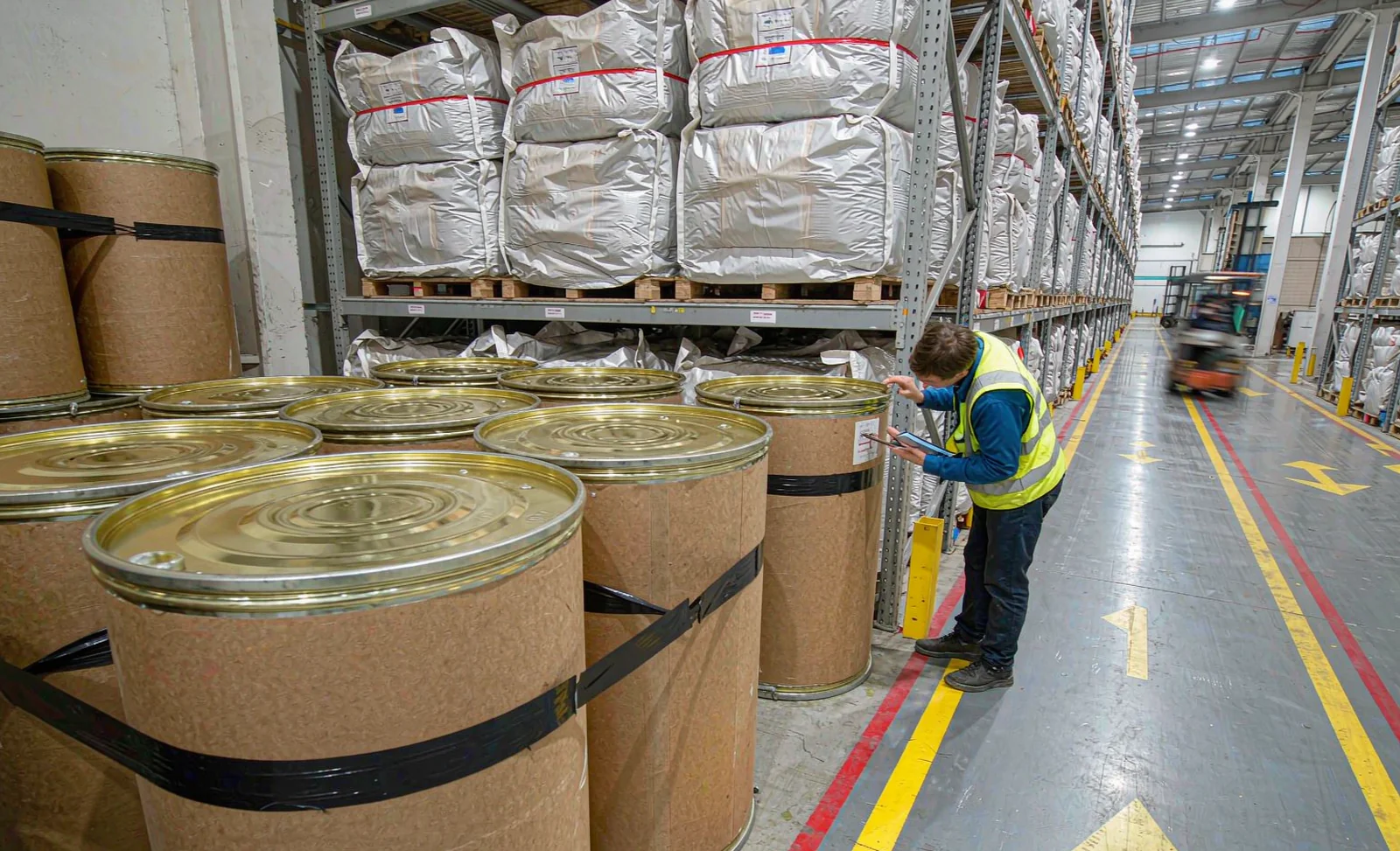
Order cadence matched to consumption. Frequent small orders cut inventory cost but multiply documentation, freight, and release overhead; a single annual order minimizes transaction cost but maximizes exposure to demand error and shelf-life limits on the material. PS powder, properly stored and within its retest or shelf-life window, supports a quarterly or semi-annual cadence for most mid-size brands — a cadence that also matches how most suppliers schedule batch production.
Structuring the Capacity Conversation with Suppliers
Capacity planning is a conversation, not a clause. Questions that surface the real picture:
- What is the current lead time for our specification, firm — and what was it six months ago?
- How far ahead is the production calendar committed, and when do our volumes need to enter it?
- What batch sizes do you schedule around, and can partial or split releases bridge our launch?
- What is the release testing cycle, and is third-party testing included or additional?
- Is there a capacity reservation or allocation agreement available for committed volumes?
Suppliers answer these questions differently, and the differences are diagnostic. A supplier who can show a production calendar, named batch slots, and a release-cycle estimate is one you can plan around. Vague answers about "standard lead times" are a signal to add buffer — or to qualify a second source before you need one.
Risk Scenarios and Buffer Planning
Name the scenarios, then assign each a response:
Launch pull-in. Demand arrives earlier than forecast — bridge with air freight for a partial quantity rather than moving the launch, and pre-position safety stock ahead of the launch window.
Supplier disruption. A batch fails release or a line goes down — a qualified second source and a standing sample-approval file turn a crisis into a switch. Qualification effort belongs in quiet quarters, not during the shortage.
Transit disruption. Port congestion or customs examination adds weeks — split shipments (a smaller air shipment plus the ocean balance) and a transit-variability buffer sized from your own receipt history, not from carrier promises.
Seasonal crunch. Q4-linked demand compresses supplier calendars — enter the production calendar early. For a Q4 finished-goods launch, bulk PS orders placed in the first half of the year carry materially less schedule risk than orders placed in high summer.
Часто задаваемые вопросы
What is a realistic end-to-end lead time for a bulk phosphatidylserine order?
As a planning figure, roughly 2–3 months from confirmed purchase order to warehouse release for standard-grade powder PS moving by ocean freight, including production, testing, documentation, and transit. Repeat orders on mature specifications run shorter; first orders, custom grades, and peak-season slots run longer. Confirm current figures with your supplier in writing at quotation.
How much safety stock should I carry for PS?
Size the buffer to your named risks rather than a fixed rule: transit variability for long ocean lanes, release-cycle variability for new specifications, and demand variance for new products. Many ingredient planners carry roughly 8–16 weeks of cover for ocean-sourced material and adjust as their own receipt and consumption data accumulate.
Why do lead times lengthen in the second half of the year?
Demand for cognitive-health finished products clusters ahead of Q4 retail seasonality, compressing supplier production calendars in preceding quarters. Buyers whose volumes enter the production calendar early face materially better slot availability than those ordering just-in-time into peak season.
Can I reserve PS production capacity with a supplier?
Many suppliers offer allocation or reservation arrangements against committed forecast volumes. The essential trade is honesty on both sides: suppliers commit slots against firm volumes, and buyers who routinely under-consume their forecasts will find reservations honored less generously next cycle.
Заключение
Phosphatidylserine supply planning rewards buyers who treat lead time as an observed, stage-by-stage reality rather than a number from a quotation template. Map the six stages, confirm current figures with the supplier in writing, size safety stock against named risks, and enter the production calendar early for peak-season launches. Combine that with a rolling forecast the supplier can actually plan against and a qualified second source for critical volumes, and PS supply stops being a launch risk and becomes what it should be: a solved procurement problem.
Источники
- US FDA — Dietary Supplements: https://www.fda.gov/food/dietary-supplements
- US Customs and Border Protection — Trade: https://www.cbp.gov/trade
- European Commission — Food Safety: https://food.ec.europa.eu/
- International Organization for Standardization: https://www.iso.org/
Рекомендуемые дальнейшие действия
- Просмотрите Phosphatidylserine страница продукта.
- Сравнить Soy PS и Sunflower PS.
- Проверять производственное доказательство и Качество и НИОКР.
Свяжитесь с отделом продаж для получения документации по продукту
Поделитесь предпочтениями источника, приложением, страной и годовым количеством.
Свяжитесь с отделом продаж