
Most phosphatidylserine market-entry plans stop at the United States and Europe, with an occasional look at Japan, Korea, or Australia. Brazil rarely appears — which is precisely why it deserves attention. Brazil combines one of the world's largest consumer health markets, an established dietary supplement culture, and a domestic ingredients industry that produces limited specialty phospholipids, meaning import-dependent demand. At the same time, Brazil's regulatory perimeter is real: ANVISA administers a specific framework for food supplements, customs localization is mandatory, and labeling in Portuguese under Mercosur rules is non-negotiable.
This guide is written for sourcing managers and brand owners evaluating Brazil for the first time. It explains how ANVISA treats food supplements, what importer localization requires, which ingredient documents to demand from your PS supplier, and where labeling plans most often stall. The consistent theme: verify current status in official sources rather than assuming US or EU permissions transfer, because they do not.
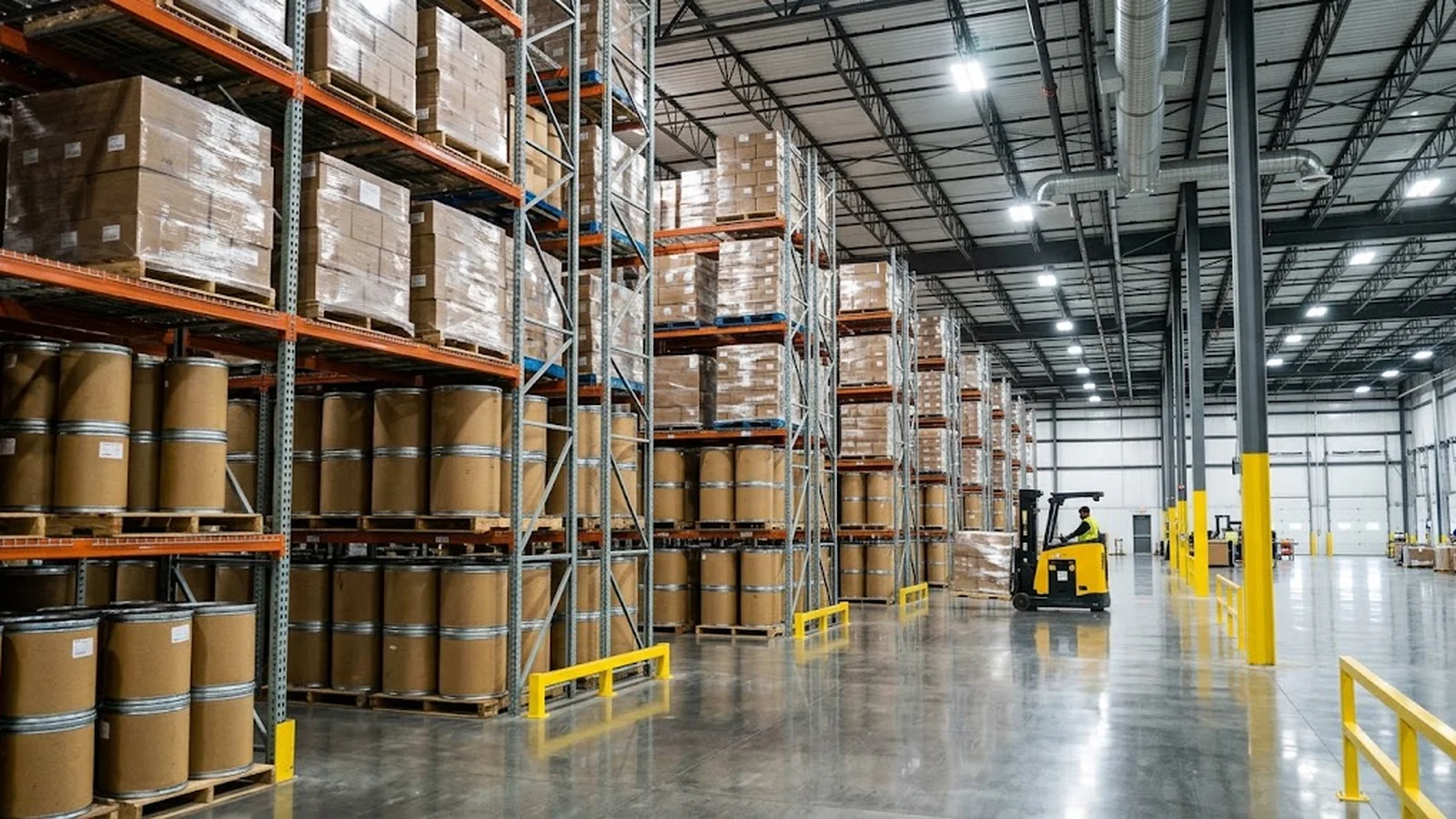
!Wide interior view of a modern Brazilian supplement distribution warehouse with racked drums and pallets For the specification detail behind these documents, see our quality and R&D overview, including test methods and release criteria.
Why Brazil belongs on the PS opportunity list
Brazil's supplement market has grown steadily on the back of sports nutrition, healthy aging, and cognitive wellness demand, and the consumer base is large enough that even modest category share translates into meaningful volume. Domestic production of specialty phospholipid ingredients is limited, so finished-product brands source PS from international suppliers — typically through importers and tolling partners who handle localization and regulatory filings. For ingredient exporters, this creates a two-sided opportunity: sell directly to Brazilian importers who already hold the licenses, or support brand clients abroad who are building Brazil portfolios. The commercial caveat is currency and logistics. Freight to Santos or Itajaí, import duties, and tax complexity mean landed cost modeling must be built early, and payment terms should be discussed at the RFQ stage rather than after the first proforma invoice.
How Brazil regulates food supplements: the ANVISA framework
Brazil regulates food supplements through ANVISA, most notably under the framework established by RDC 243/2018 and its related norms, which define what food supplements are, the permitted forms, dose ceilings and floors for listed substances, and labeling obligations. The important strategic point for buyers is that ingredient eligibility is defined by these rules — a substance and dose must fit the framework before any registration or notification conversation starts. For phosphatidylserine, the practical task is to confirm its current status under the applicable lists at the intended daily dose, using ANVISA's published rules and, where ambiguity exists, a Brazilian regulatory consultant. Do not assume that FDA dietary ingredient status or EU novel food clearance says anything about Brazil; the frameworks are independent. Manufacturers of the finished product in Brazil must hold appropriate licensing, and the product route — notification versus registration-type control — depends on the category and claims, so the importer's quality team should map this before committing to a formulation.
Importer localization: RADAR, Siscomex and ANVISA import control
Selling into Brazil means clearing its customs system, which is unforgiving of amateur setups. The importer needs a CNPJ and a RADAR/Siscomex-enabled customs profile with the Receita Federal, and goods under ANVISA surveillance require ANVISA import authorization workflows at entry — shipments can be channeled into documentary or physical checks, and clearance times vary accordingly. For a foreign ingredient supplier, the practical implications are threefold. First, your Brazilian counterpart's capability is part of your quality chain: an experienced food importer with existing ANVISA channels is worth a slightly higher price than a general trader improvising its first regulated food entry. Second, your documentation must arrive complete before the vessel does, because missing declarations extend port dwell in a system where storage and demurrage accumulate quickly. Third, consider whether you will appoint a distributor, a regulatory service firm, or your own entity — each model changes who holds registrations and who bears import risk, and that allocation should be contracted in writing.

Documentation to demand from the ingredient supplier
The Brazilian import file builds on the same backbone used for US and EU shipments, but reviewers map it to local expectations, so consistency matters more than volume. The core pack: a current specification stating identity, assay, and physical parameters; a per-batch COA matching that specification; allergen and GMO declarations; a certificate of analysis traceable to the manufacturing site with its quality certification; and safety substantiation such as toxicological references supporting the ingredient's use. Brazilian practice places weight on documents being consistent with each other — the product name, grade, and manufacturing site across invoice, certificate, and declaration must align exactly, because mismatches are a classic trigger for channeling into inspection. Suppliers serving Brazilian customers should also be asked about export experience to Mercosur countries, Portuguese-language document support, and willingness to have their technical file reviewed by the importer's regulatory consultant. A supplier who resists third-party review of documentation is telling you how the first shipment will go. One more Brazil-specific habit: agree early on how document updates are communicated. Specifications, certificates, and site certifications have expiry dates, and a renewal that arrives after the vessel has sailed turns a routine update into a customs conversation. Importers who build a standing document-refresh calendar with their PS supplier — aligned to COA batches, certificate validity windows, and shipping schedules — keep ANVISA channeled entries boring, which is exactly how clearance should be.
Labeling in Portuguese and Mercosur rules
Brazilian labeling runs on Mercosur harmonized food labeling rules implemented nationally, plus ANVISA's supplement-specific requirements. Portuguese is mandatory for consumer-facing information, nutritional labeling follows Brazilian formats rather than the US Supplement Facts panel, and claims are constrained to what the framework and any authorizations permit — structure-function language that is routine in the US can be impermissible in Brazil without support under the local rules. Artwork lead time is the hidden cost: translating, adapting to local formats, and approving label masters typically adds weeks to a launch plan, and ingredient-level declarations — allergen statements, GMO status, processing aids — must feed that artwork accurately. Buyers should request supplier-controlled declaration texts once, at qualification, and reuse them across markets. Brands that treat Brazilian labeling as a project with its own timeline ship on schedule; brands that treat it as a translation task re-plan their launch at port.
FAQ
Q: Does phosphatidylserine require product registration in Brazil?
A: Finished food supplements follow ANVISA's framework, where the control route depends on the product category, claims, and the ingredient's status under the applicable rules. Buyers should verify the current treatment of phosphatidylserine at the intended dose in the official lists and framework rules, ideally with a Brazilian regulatory consultant, before finalizing formulation or contracts.
Q: Can a foreign company import directly into Brazil?
A: In practice, imports are executed by a Brazilian entity holding a CNPJ and a RADAR-enabled customs profile, with ANVISA import authorization workflows for regulated goods. Foreign suppliers typically work with Brazilian importers, distributors, or regulatory service firms, and should contractually clarify who holds registrations and bears import risk.
Q: Which supplier documents does a Brazilian importer need for PS?
A: The core set mirrors other regulated markets: specification, per-batch COA, allergen and GMO declarations, manufacturing site quality certification, and safety substantiation for the ingredient's use. Consistency across documents — names, grades, sites — matters as much as completeness, because mismatches commonly trigger inspection channeling.
Q: Is a US Supplement Facts label acceptable in Brazil?
A: No. Brazilian labeling requires Portuguese consumer information, the local nutritional labeling format, and compliance with ANVISA's supplement-specific and Mercosur-derived rules. US or EU artwork cannot simply be translated; claims must also be re-validated against Brazilian restrictions, so plan label development as a distinct project phase.
Conclusion
Brazil rewards importers who respect its system's orderliness. The ANVISA supplement framework, customs localization, and Mercosur labeling rules are demanding but knowable, and they lean on the same ingredient documentation disciplined buyers already maintain — specifications, COAs, declarations, and traceability. The winning sequence is to verify ingredient status at the target dose, qualify an experienced Brazilian importer or regulatory partner, align supplier documents to local review expectations, and run labeling as a dedicated workstream. Phosphatidylserine suppliers who can support that file with clean, consistent documentation give their brand clients a genuine head start in a large market where many competitors have not yet looked. When you are ready to move from checklist to quotation, contact our team with the grade, source and document set described above.
Sources
- ANVISA (Brazilian Health Regulatory Agency) — https://www.gov.br/anvisa
- ANVISA — Food Supplements Regulatory Theme — https://www.gov.br/anvisa/pt-br/assuntos/regulamentacao
- Receita Federal do Brasil — Foreign Trade (RADAR/Siscomex) — https://www.gov.br/receitafederal
- PubMed — Phosphatidylserine research literature — https://pubmed.ncbi.nlm.nih.gov/?term=phosphatidylserine
- Mercosur — http://www.mercosur.int
Buyer fit
Who this guide is for
This guide is written for the buyer profiles below. Open your profile for the matching grades, documents and next steps, or tell us your requirements directly.
Recommended next steps
- Review the Phosphatidylserine product page.
- Compare Soy PS and Sunflower PS.
- Check manufacturing proof and Quality & R&D.
Contact sales for product documents
Share source preference, application, country, and annual quantity.
Contact Sales