
Founders launching a phosphatidylserine product into the US or EU e-commerce market usually arrive at the same fork in the road within their first month of research. Down one path sits the white-label ODM offer: a finished, pre-developed PS formula — often capsules or gummies — that a contract manufacturer already makes for other brands, ready to carry your label with low minimums and a short runway. Down the other path sits custom formulation: your own PS dose, delivery format and supporting ingredient stack, developed with an OEM partner over months and minimums measured in thousands of units rather than hundreds.
Both routes put a PS product on a store page; they differ in unit economics, differentiation against the similar PS SKUs already ranking on marketplaces, ownership of the formula and claims, and the regulatory work each route transfers onto your desk.
This guide compares the two routes specifically for phosphatidylserine — a premium, supply-constrained cognitive ingredient where the route decision matters more than for commodity supplements — and closes with a decision checklist.
!E-commerce supplement brand workspace with product pouches, capsules and a laptop showing a storefront Buyers preparing this documentation can review our phosphatidylserine programme alongside the grade, source and market detail above.

The white-label ODM route: speed and catalog constraints
White label is the fast lane. The ODM supplier has already done formulation development, stability work, sensory testing and — if you choose carefully — regulatory review, so your contribution is label design, brand story and distribution. Minimum order quantities commonly start at a few hundred units, cash outlay before revenue is small, and a launch that would take six to nine months on a custom path can compress to six or ten weeks. For a brand testing demand — two or three cognitive SKUs against search and social traffic — that speed is not a compromise; it is the strategy.
The constraint is the catalog. A white-label formula is a public asset: the same PS capsule at the same 100 or 300 mg dose exists in other brands' bottles, frequently with the same excipients and the same capsule count. Your differentiation is limited to brand, price, bundle and creative — none of which survive a competitor's discount coupon very well. Margins are structurally thinner too, because you buy a finished good whose price includes the manufacturer's formulation, inventory and margin. And the ODM's specification becomes yours: if its shelf life, allergen profile or dosage format does not fit your market, your flexibility stops at the label.
The custom formulation route: control and cost
Custom formulation buys the things white label cannot: a dose that matches the evidence you want to cite, a delivery format matched to your audience — capsules, gummies, stick packs, RTD — and a supporting stack (omega-3s, B vitamins, adaptogens) that turns a commodity listing into a defensible product. The formula is yours, which matters as the brand grows: you can move it between manufacturers, reformulate on price without redesigning the product, and build label claims on your own formulation rather than someone else's generic sheet.
The costs arrive on three axes. Cash: formulation development, pilot batches, finished-product stability studies and artwork add tens of thousands before the first sale. Time: six to nine months from brief to sellable inventory, longer if EU novel food questions or US claim substantiation demand attention. And workload: the regulatory file is genuinely yours — US structure-function substantiation, EU member-state notifications, label compliance — while a reputable ODM shares that burden for a formula it sells to many brands. Budget as much management attention as money: PS formulation, sourcing and stability decisions compound across the product's life.
Total cost and timeline compared
Compare total cost to a working business, not invoice to first unit. White label: low upfront spend, but unit costs stay high, and margin erosion from marketplace fees and paid traffic bites harder at the bottom of a fixed-cost finished good. Custom: high upfront spend, but a raw-material-based unit cost that typically yields better gross margin at scale, plus the option to optimize cost drivers — PS grade and concentration, excipients, format — in ways a fixed catalog item never permits.
White label launches in weeks and allows fast iteration; custom takes months and punishes half-formed ideas. A pragmatic lens: use white label when the uncertain variable is demand; choose custom when demand is proven and the uncertain variable is whether the product can defend its price over time.
IP, exclusivity and claims ownership
Contracts decide what you actually own. With white label, ask directly: is the formula exclusive, shared, or available to your named competitors? Who owns the stability data behind the shelf life on your label — and if the relationship ends, can another manufacturer reproduce and support the product? With custom, insist on written assignment of formula IP and ownership of stability and substantiation data, and confirm the manufacturer's confidentiality policy toward other customers. Claims deserve equal care either way: US structure-function language must be substantiated for your product, EU health-claim rules leave limited room for cognitive claims, and the route you choose changes who drafts, who defends and who is liable.
A hybrid path: customized white label
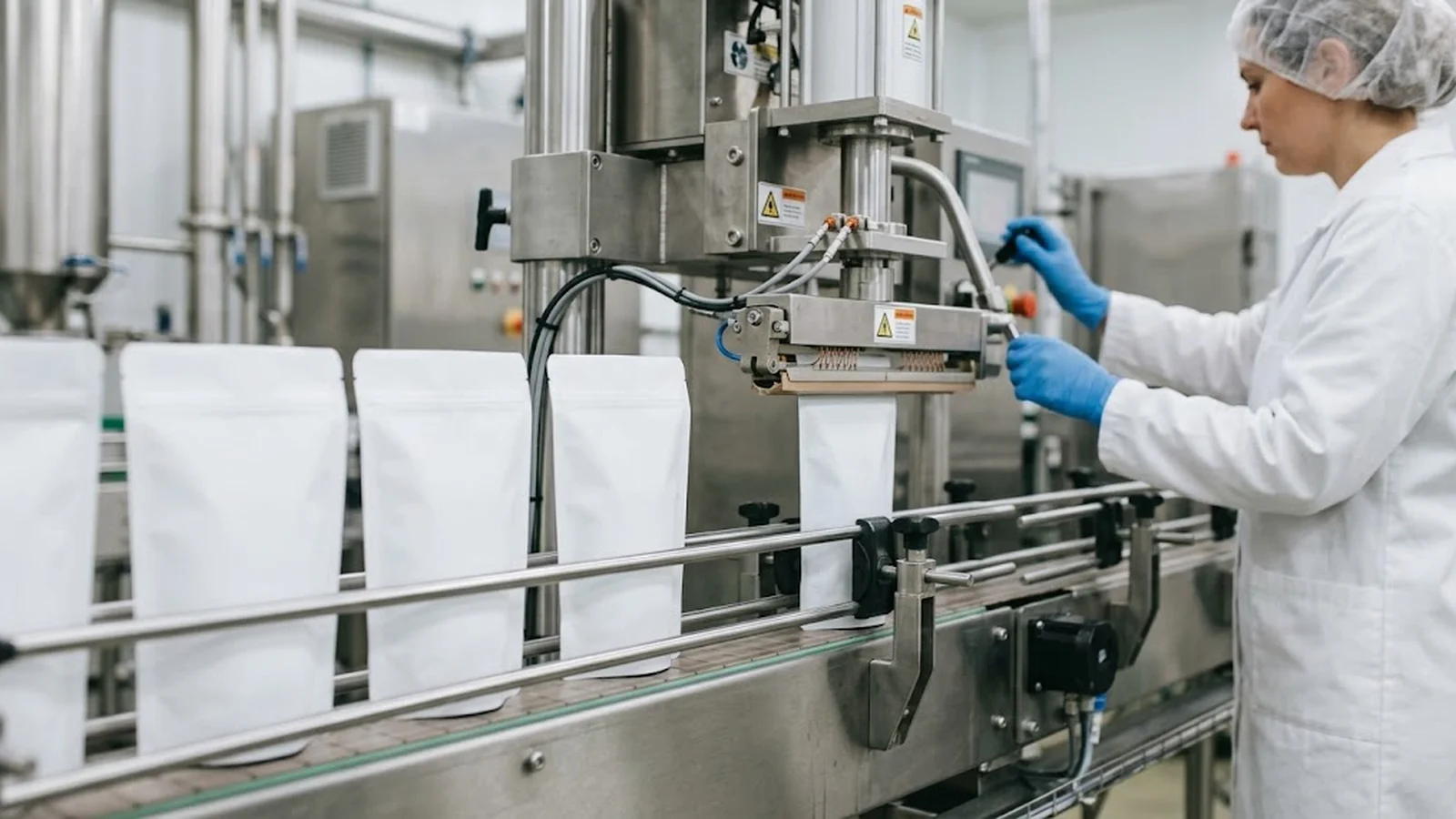
Between the two poles sits the option many successful e-commerce brands actually take: start from an ODM base product and negotiate real customization — your dose, a modified excipient system, a different flavor or format, your own artwork on a stock formula. Development cost is a fraction of full custom, timeline is often two to four months, and if the ODM agrees in writing to exclusivity on the modified version, the differentiation gap narrows substantially. The trade-off: base IP remains the manufacturer's, so confirm what happens to the customized formula if you later switch suppliers, and keep a second-source qualification path warm once volumes justify it.
Decision checklist for e-commerce brands
Before committing, answer five questions in writing. First, what is this product's job — demand validation, a flagship with margin, or a line extension? Second, how differentiated must the formula be for your marketing to work, honestly assessed against competitors' labels? Third, what gross margin does your acquisition cost model require at the price the market will bear? Fourth, who will own the regulatory workload in the US and EU, and is your substantiation real for the dose you plan to claim? Fifth, if the manufacturer relationship ended in month eighteen, what would you still own? If your answers cluster around speed and testing, white label fits. If they cluster around margin, differentiation and durability, budget for custom. If they cluster around "both, eventually," start with a negotiated customized white label and schedule the custom project for when volume proves the concept.
FAQ
Q: What minimum order quantities should I expect on each route?
A: White-label PS products often start at a few hundred units; customized white label typically begins around one to two thousand; full custom formulation with a dedicated production run usually starts at five to ten thousand units or higher, depending on format and whether the manufacturer holds the PS powder in stock.
Q: Can I move a white-label product to a different manufacturer later?
A: Only if the formula and its supporting data — master formula, stability, specifications — are transferable and the manufacturer permits it. Some ODMs treat catalog formulas as proprietary. If portability matters to you, negotiate it in writing before the first order, not when you need to switch.
Q: Which route carries more regulatory risk in the US and EU?
A: Custom formulation puts more regulatory responsibility on you, because the claims, substantiation and notifications are tied to your own formulation. White label does not eliminate the burden — the brand on the label owns the claims in both markets — but a reputable ODM's shared documentation reduces the work. In the EU, cognitive health claim limits apply regardless of route.
Q: Is white label always cheaper per unit?
A: Upfront, yes. At scale, not necessarily: custom products built on raw material sourcing typically achieve better gross margins once volumes justify production runs. White label is cheaper to start, custom is cheaper to grow.
Conclusion
For phosphatidylserine, the white-label-versus-custom decision is less about budget than about what the product needs to become. White-label ODM routes a proven formula to market in weeks with minimums a founder can survive, and wins the testing phase; custom formulation buys dose control, format differentiation, better long-term margin and formula IP, and wins the growth phase. The disciplined path most e-commerce brands should consider runs through both: validate demand on a negotiated, semi-exclusive white-label base, then invest the margin it generates into a custom formula that owns its claims, its stability data and its supply chain. Whichever route you choose, put the commercial terms in writing — exclusivity, IP, data ownership, transferability — because in eighteen months those clauses, not the label design, will decide what your brand actually controls. When you are ready to move from checklist to quotation, contact our team with the grade, source and document set described above.
Sources
- FDA — Structure/function claims and substantiation for dietary supplements: https://www.fda.gov/food/dietary-supplements
- EU Register of nutrition and health claims made on foods (Regulation (EC) No 1924/2006): https://ec.europa.eu/food/safety/labelling_nutrition/claims/register/
- FTC — Health Products Compliance Guidance (substantiation for advertising claims): https://www.ftc.gov/business-guidance/resources/health-products-compliance-guidance
- ESSNA — guidance on health claims for the European sports and supplement sector: https://www.essna.com/
Buyer fit
Who this guide is for
This guide is written for the buyer profiles below. Open your profile for the matching grades, documents and next steps, or tell us your requirements directly.
Recommended next steps
- Review the Phosphatidylserine product page.
- Compare Soy PS and Sunflower PS.
- Check manufacturing proof and Quality & R&D.
Contact sales for product documents
Share source preference, application, country, and annual quantity.
Contact Sales