
Regional phosphatidylserine market-entry plans tend to give Vietnam a footnote, yet the market deserves its own page: close to 100 million people, one of the youngest demographic profiles in Asia paired with a rapidly aging cohort interested in memory and focus products, and a supplement category that has grown quickly on the back of pharmacies, e-commerce, and direct selling. Vietnam also runs a regulatory system with its own logic — the health protection food declaration regime — that none of its neighbors copy exactly. A PS grade that clears US and EU review without friction can still sit at the Vietnamese border if the declaration dossier was built on incomplete ingredient files.
This guide is written for sourcing managers and brand owners evaluating Vietnam for the first time. It walks through the health protection food declaration framework, the importer eligibility your local partner must hold, and the documentation to demand from your ingredient supplier before the first shipment. The recurring theme will be familiar: verify current requirements in official Vietnamese sources rather than assuming that regional or Western clearances transfer, because in Vietnam they often do not.
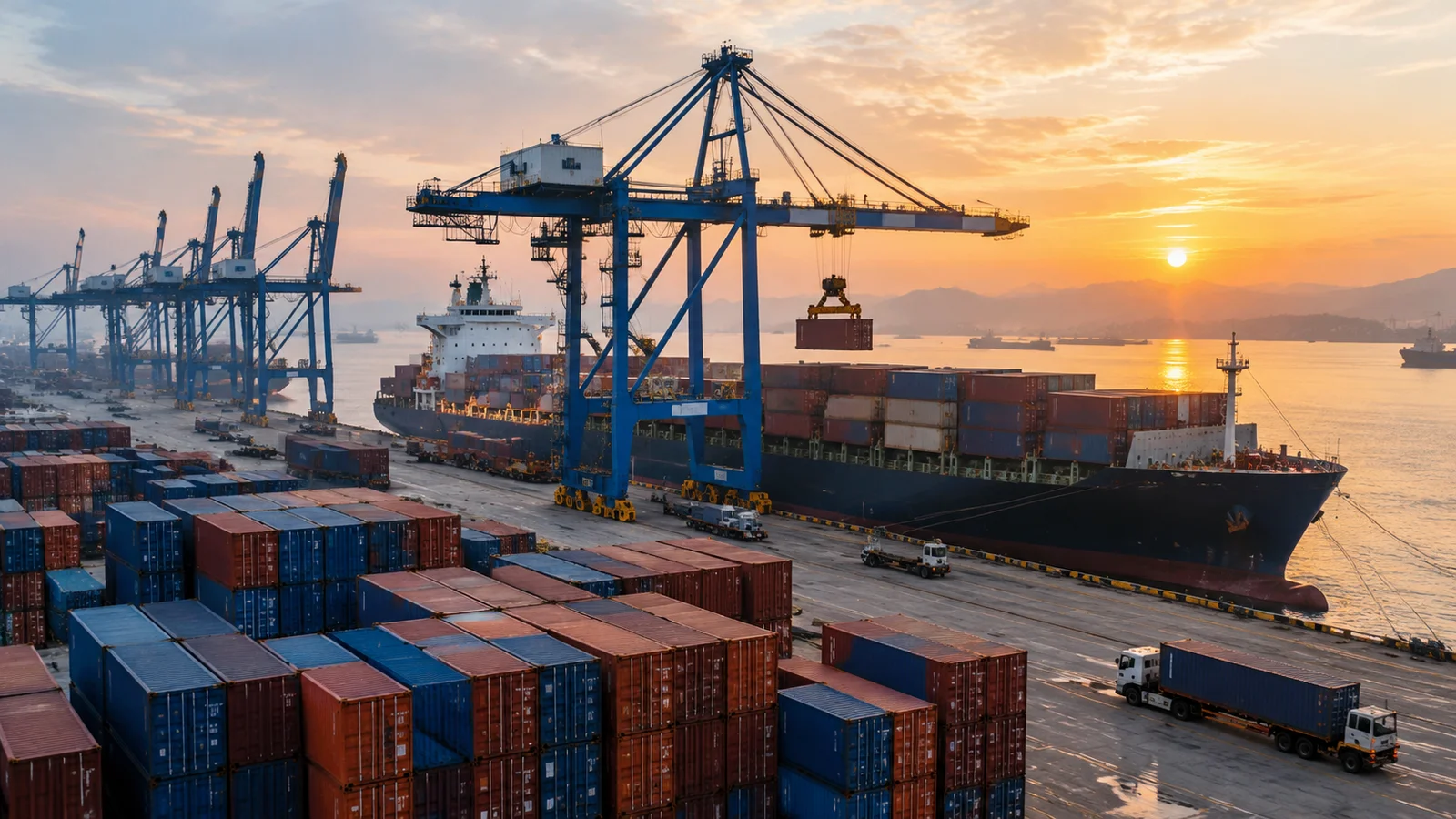
!Container port cranes loading export cargo at a Vietnamese seaport at dawn For the ingredient documentation backbone referenced throughout, review our soy-derived phosphatidylserine specifications.
Why Vietnam is a distinct PS opportunity in Southeast Asia
Vietnam's consumer health market rests on strong fundamentals: a population approaching 100 million, a fast-expanding middle class, and a supplement culture that spans traditional remedies, vitamins, and an increasingly visible functional-ingredients segment where cognitive health fits naturally. Domestic production of specialty phospholipids is effectively nonexistent, so PS demand is import-dependent — brands source the ingredient through importers or contract manufacturers who carry the regulatory declarations. The commercial upside is real, but so is the operational floor: imported supplements compete against established local players who have already absorbed the declaration workload into their launch process, and landed-cost modeling must account for duties, handling at Cat Lai, Hai Phong, or Cai Mep, and the lead time that dossier preparation and legalization add to any launch. Buyers who treat Vietnam as "another ASEAN market" usually discover the difference at the document stage; the broader regional picture is covered in our Southeast Asia market entry guide.
Vietnam's supplement framework: health protection food declaration
Vietnam regulates dietary supplements — thực phẩm bảo vệ sức khỏe, or health protection foods — through the Ministry of Health, with the declaration and registration system defined in the food safety decrees led by Decree 15/2018/ND-CP and its amendments. Every health protection food marketed in Vietnam must have a accepted product declaration (a công bố sản phẩm dossier) with a registration receipt number that appears on the label; selling undeclared supplements is an enforcement matter, not a paperwork nuance. The dossier is filed by the Vietnamese organization or individual responsible for the product — the importer, manufacturer's local representative, or an appointed declaration holder — and typically contains the product composition and formula, ingredient specifications, the basis for functional claims, product test results, a legalized certificate of free sale from the country of origin, and a power of attorney where a foreign manufacturer appoints the local filer. For an ingredient buyer, the strategic takeaway is upstream: the finished-product dossier inherits the ingredient file. Phosphatidylserine's identity, source, specifications, and safety substantiation all feed the declaration, and gaps at ingredient level surface as deficiencies at declaration level — typically after weeks of queue and legalization time.
Importer eligibility and entry control
The entity importing your PS — or the finished product containing it — must be a registered Vietnamese business with the food-safety eligibility required for importing health protection foods, including the certificate of food safety eligibility issued for import activities and, in practice, customs registration and specialized inspection procedures that apply to health products at entry. Shipments of regulated food supplements pass through customs channels where declarations are examined and goods can be held for documentary or physical checks; mismatches between declared and actual products are a standard route to delays and costly re-export decisions. For a foreign ingredient supplier, the practical implications mirror other tightly controlled markets: your counterpart's licensing depth is part of your risk chain, document sets must be complete and legalized before the vessel arrives, and who holds the declaration and bears import risk should be written into the supply or distribution agreement. Foreign suppliers do not file declarations themselves — choosing a Vietnamese partner with an existing health protection food track record is the single highest-leverage decision in the market entry plan. Timelines reward preparation as well: eligibility certificates, customs registration, and specialized inspection channels each run on their own processing windows, so aligning them during partner qualification keeps the launch calendar from slipping at the border.

Supplier documentation and Vietnamese-language labeling
The ingredient document pack for Vietnam builds on the same backbone used for US and EU shipments, with legalization as the material addition. The core set: a current specification stating identity, assay, and physical parameters; a per-batch COA consistent with that specification; allergen declarations (soy-derived PS is, explicitly, soy); GMO status statements; manufacturing site quality certification; and safety substantiation supporting the ingredient's intended use. Documents destined for the declaration dossier or customs review typically require notarization and consular legalization, so buyers should sequence legalization alongside dossier drafting rather than after it. Document discipline is decisive because reviewers cross-check consistency — product names, grades, and manufacturing sites must align across the dossier, certificates, and labels. Labeling is the second consistent stall point: Vietnamese-language mandatory information follows the goods labeling rules under Decree 43/2017/ND-CP, the declaration receipt number, origin, and content declarations must appear as required, and functional claims stay within what the accepted declaration supports. Buyers should collect supplier-controlled declaration texts once, at qualification, and reuse them across markets — the same document chain that keeps multi-market launches aligned is described in our COA and specification review checklist.
FAQ
Q: Does phosphatidylserine require product registration in Vietnam?
A: The finished health protection food product must have an accepted product declaration with a registration receipt number before it can be marketed in Vietnam; the ingredient itself is not declared separately, but its identity, specifications, source, and safety documentation feed the product dossier. Buyers should confirm PS's current treatment at the intended dose and claim set with the Ministry of Health's published rules and, where needed, a Vietnamese regulatory consultant.
Q: Can a foreign company declare products and import into Vietnam directly?
A: No. Declaration filing and import execution are done by a Vietnamese organization or individual holding the required business registration and food-safety eligibility for importing. Foreign suppliers work with Vietnamese importers, distributors, or regulatory service firms, and should contractually clarify who holds the declaration and bears import risk.
Q: Which supplier documents does a Vietnamese importer need for PS?
A: The core pack is the specification, per-batch COA, allergen and GMO declarations, manufacturing site quality certification, and safety substantiation — with notarization and consular legalization where documents enter the declaration dossier or customs review. Consistency across all documents (names, grades, sites) matters as much as completeness, because mismatches routinely trigger review delays.
Q: How long does Vietnam market entry take for a PS supplement?
A: Timelines vary with dossier quality and claim scope: legalization of origin documents, dossier preparation, and the declaration acceptance process each add weeks, and functional claim substantiation is often the longest pole. Planning the ingredient document pack in parallel with partner selection — rather than after it — is the most reliable way to compress the calendar.
Conclusion
Vietnam rewards suppliers and buyers who treat the health protection food declaration as a first-order design input rather than downstream paperwork. The winning sequence is to verify ingredient status and claim substantiation at the target dose, qualify a PS grade whose document set survives legalization and cross-checking, partner with a Vietnamese importer that already holds accepted declarations in supplements, and run Vietnamese-language labeling as a dedicated workstream with its own timeline. None of this requires new science — it requires the same disciplined document chain disciplined buyers already maintain, applied to one more market's declaration system. When you are ready to match a grade and document set to your Vietnam plan, contact our sourcing team for samples and a tailored review.
Sources
- Ministry of Health, Viet Nam (food safety and health protection food regulation) — https://moh.gov.vn
- Vietnam Food Administration (VFA) — https://vfa.gov.vn
- Vietnam National Trade Repository (Decree 15/2018/ND-CP, food safety; Decree 43/2017/ND-CP, goods labeling) — https://vntr.moit.gov.vn
- General Department of Vietnam Customs — https://customs.gov.vn
- PubMed — Phosphatidylserine research literature — https://pubmed.ncbi.nlm.nih.gov/?term=phosphatidylserine
Buyer fit
Who this guide is for
This guide is written for the buyer profiles below. Open your profile for the matching grades, documents and next steps, or tell us your requirements directly.
Recommended next steps
- Review the Phosphatidylserine product page.
- Compare Soy PS and Sunflower PS.
- Check manufacturing proof and Quality & R&D.
Contact sales for product documents
Share source preference, application, country, and annual quantity.
Contact Sales